What Does Checking a Crypto Wallet Balance Mean?
Checking a crypto wallet balance is the process of viewing the total amount of cryptocurrency held at a specific blockchain address. For Bitcoin (BTC), Ethereum (ETH), Tron (TRX), and USDT addresses, you can view the balance using a public blockchain explorer or a dedicated wallet screening tool. The balance is always public on the blockchain because cryptocurrency transactions are transparent and immutable. However, a balance check alone does not tell you whether those funds are clean or tainted. You need an AML check crypto wallet service to assess risk. This combines balance verification with transaction history analysis, sanctions screening, and darknet exposure detection to give you a complete picture of the wallet's legitimacy.
How to Check Tron Wallet Balance and USDT Address Risk
To check a Tron wallet balance, you can use the official Tron blockchain explorer (Tronscan) or a dedicated AML wallet screening tool. For USDT on Tron (TRC20), the process is the same: enter the wallet address and view the balance. However, checking balance alone leaves you exposed. A proper AML check crypto wallet service will scan the address against sanctions lists, identify if it has received funds from mixers or darknet markets, and assign a risk score. When checking a Tron address or USDT wallet before a transaction, use a service that performs real-time transaction monitoring and provides a detailed risk report. This is especially important for business transactions where receiving tainted coins can result in frozen USDT, exchange account bans, or regulatory compliance issues. The AML Services page on this site lists verified screening tools that handle TRX and USDT checks with high accuracy.
Understanding AML Risk Scores and What They Mean
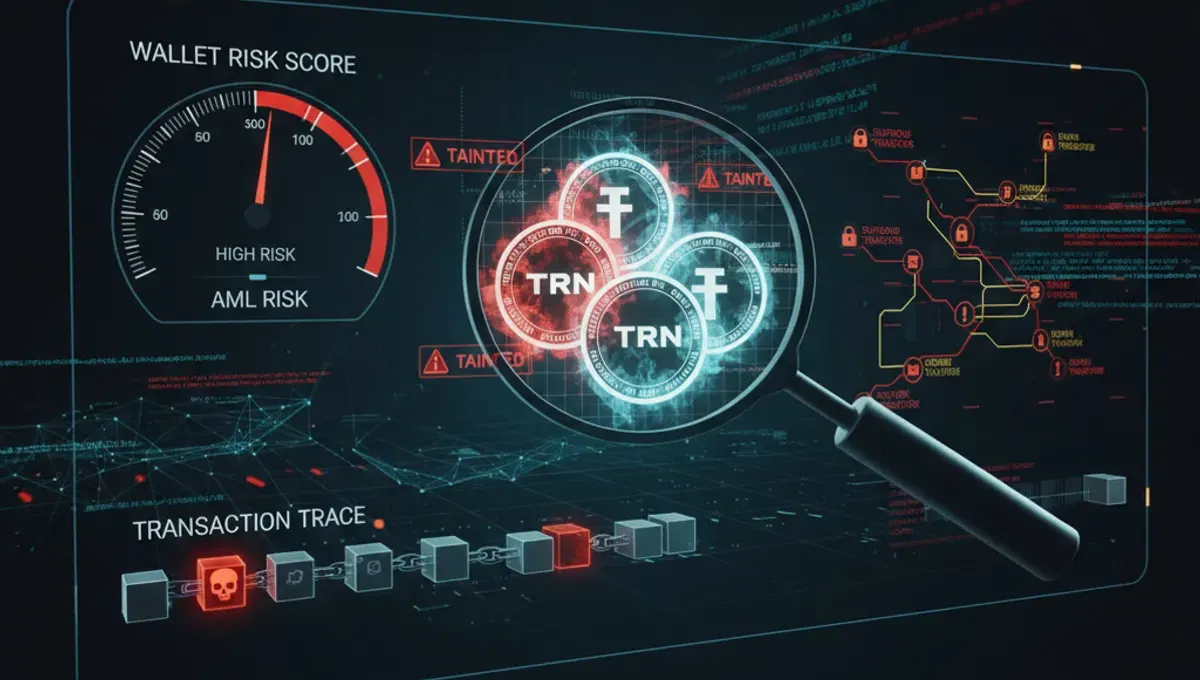
An AML risk score is a numerical rating assigned to a wallet based on its transaction history, sources of funds, and exposure to high-risk activities. Risk scores typically range from 0 (clean) to 100 (high risk). A score below 20 indicates low risk and acceptable for most transactions. Scores between 20 and 50 suggest moderate risk—the wallet may have received funds from mixers or unverified sources but shows no direct darknet or sanctions exposure. Scores above 50 indicate significant risk: the wallet may hold stolen funds, have direct links to sanctioned entities, or show clear darknet market activity. When you perform an AML check crypto wallet, the report should explain which risk factors contributed to the score. Common red flags include: funds from known theft incidents, mixer usage, gambling platform deposits, and transactions with sanctioned addresses. Always review the detailed breakdown, not just the number.
Step-by-Step: How to Check a Crypto Wallet Before Receiving Funds
Follow these steps to screen a wallet before accepting a payment:
- Obtain the wallet address from the sender in full (copy-paste to avoid typos).
- Visit a trusted AML wallet screening service (check the verified list on this site's AML Services page).
- Paste the address into the search field and select the correct blockchain (Bitcoin, Ethereum, Tron, etc.).
- Review the balance and transaction count to confirm the address is active.
- Check the AML risk score and read the detailed risk report.
- Look for specific red flags: darknet market exposure, mixer usage, sanctions list matches, or stolen fund indicators.
- If the score is below 20 and shows no major red flags, the wallet is generally safe to receive from.
- If the score is above 50 or shows darknet/sanctions exposure, reject the transaction or escalate to compliance.
- Document the AML check result for your records (required for regulated businesses).
- For ongoing monitoring, enable transaction alerts if the service offers them.
This process takes 2–3 minutes and prevents costly compliance violations.
What Happens If You Receive Tainted Coins or Dirty Crypto?
Receiving tainted coins—cryptocurrency linked to theft, sanctions, or illegal markets—can have serious consequences. If you deposit dirty crypto into an exchange, the exchange's compliance system may flag the transaction and freeze your account pending investigation. USDT holdings can be frozen if the address is blacklisted by the token issuer. You may face delays in withdrawing funds, mandatory KYC/AML verification, or permanent account closure. In regulated jurisdictions, receiving sanctioned funds can expose you to legal liability. If you discover you have received dirty crypto, do not attempt to mix or launder it. Instead, report the incident to the exchange and preserve all transaction records. Use an AML check crypto wallet service to document the risk score and source of the funds. This evidence helps demonstrate that you received the funds unknowingly and strengthens your position if regulators investigate. Prevention is far easier than remediation: always screen wallets before accepting payments.
How to Avoid Receiving Tainted Coins and Dirty Crypto
Preventing tainted coin exposure requires discipline and the right tools. First, establish a policy: always perform an AML check crypto wallet before accepting payments above a certain threshold (e.g., $1,000 or more). Second, use a dedicated wallet screening service rather than relying on balance checkers alone. Third, educate your team on common risk indicators: unsolicited payments from unknown addresses, unusually large transfers, and addresses with high transaction velocity. Fourth, maintain a whitelist of trusted sender addresses and screen new addresses against it. Fifth, if you operate a business, integrate transaction monitoring into your payment workflow so every incoming address is automatically screened. Sixth, keep detailed records of all AML checks performed; this demonstrates due diligence if regulators audit your compliance. Finally, stay informed about emerging risk categories—new darknet markets and mixer services appear regularly, and screening tools must update their databases continuously. Services listed on the AML Services page maintain real-time threat intelligence to catch these emerging risks.
Comparing Balance Checkers vs. Full AML Wallet Screening
A simple balance checker (like a blockchain explorer) shows you the amount of cryptocurrency at an address and basic transaction history. It is free and fast but provides no risk assessment. A full AML check crypto wallet service combines balance verification with sanctions screening, darknet exposure detection, mixer identification, and stolen fund tracking. It assigns a risk score and generates a detailed report. The trade-off is speed and cost: full AML checks take 10–30 seconds and may charge a small fee per lookup, but they protect you from compliance violations and financial loss. For personal use or casual checking, a balance checker is sufficient. For business transactions, regulated compliance, or high-value transfers, a full AML wallet check is essential. The verified services on this site's AML Services page offer both speed and accuracy, with most checks completing in under one minute. Many offer free trials or a limited number of free checks per month, so you can test the service before committing.
Frequently asked questions
Can I check a crypto wallet balance without an account?
Yes. Public blockchain explorers like Etherscan (Ethereum), Blockchain.com (Bitcoin), and Tronscan (Tron) let you view any wallet balance by entering the address. No account is required. However, for AML risk assessment, you may need to register with a screening service, though many offer free trials.
What is the difference between checking balance and AML screening?
Balance checking shows only the amount of cryptocurrency at an address. AML screening adds risk assessment: it checks for sanctions exposure, darknet links, mixer usage, and stolen funds. A wallet can have a large balance but high AML risk, making it unsafe to receive from.
How long does an AML check crypto wallet take?
Most AML wallet checks complete in 10–30 seconds. The service queries the blockchain, cross-references sanctions lists and threat databases, and generates a risk score. Results are typically instant or within one minute.
What AML risk score is acceptable for receiving USDT or TRX?
A score below 20 is generally safe. Scores 20–50 indicate moderate risk and may require additional due diligence. Scores above 50 suggest high risk and should be rejected unless you have a specific reason to proceed and can document it for compliance.
Can I check a wallet balance on multiple blockchains?
Yes, but you need the correct address for each blockchain. A Bitcoin address cannot hold Ethereum, and a Tron address cannot hold Bitcoin. Use the appropriate blockchain explorer or AML service for each asset type. Verified services on this site support multiple blockchains in one platform.