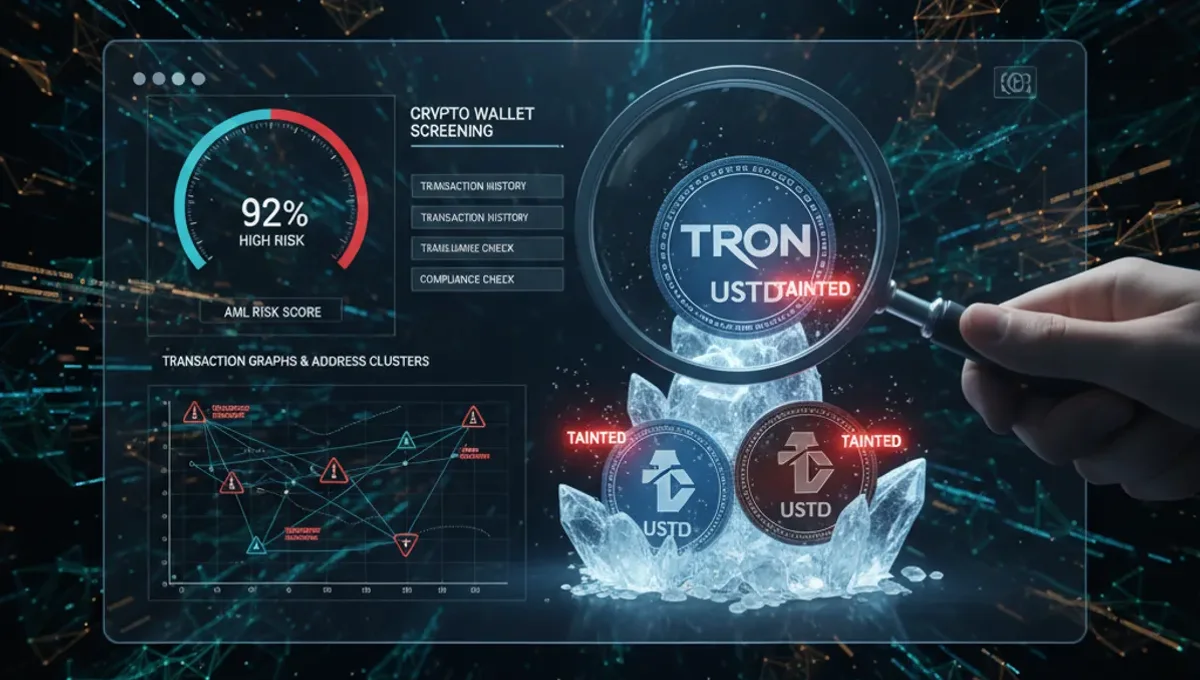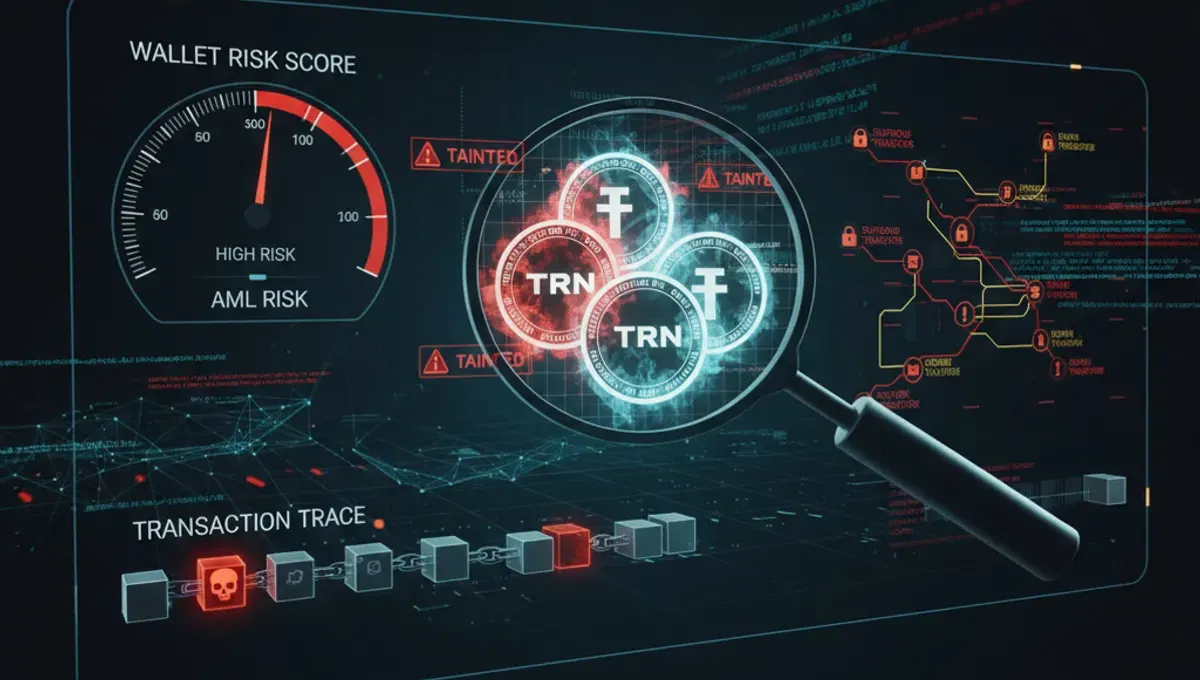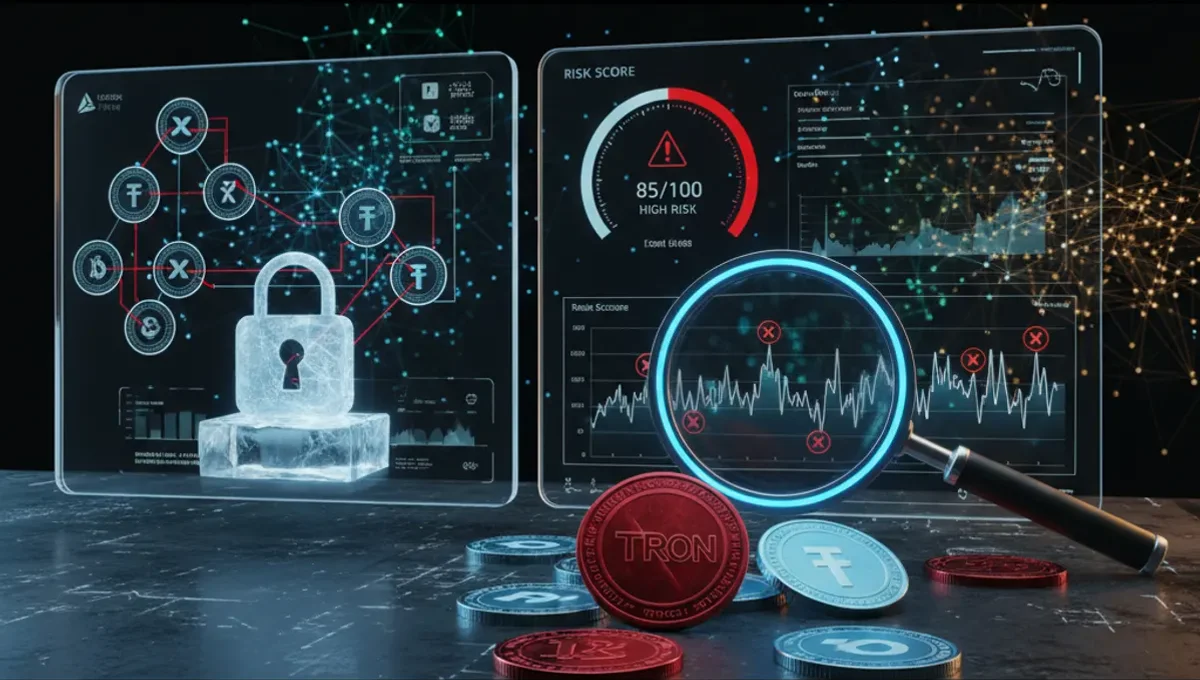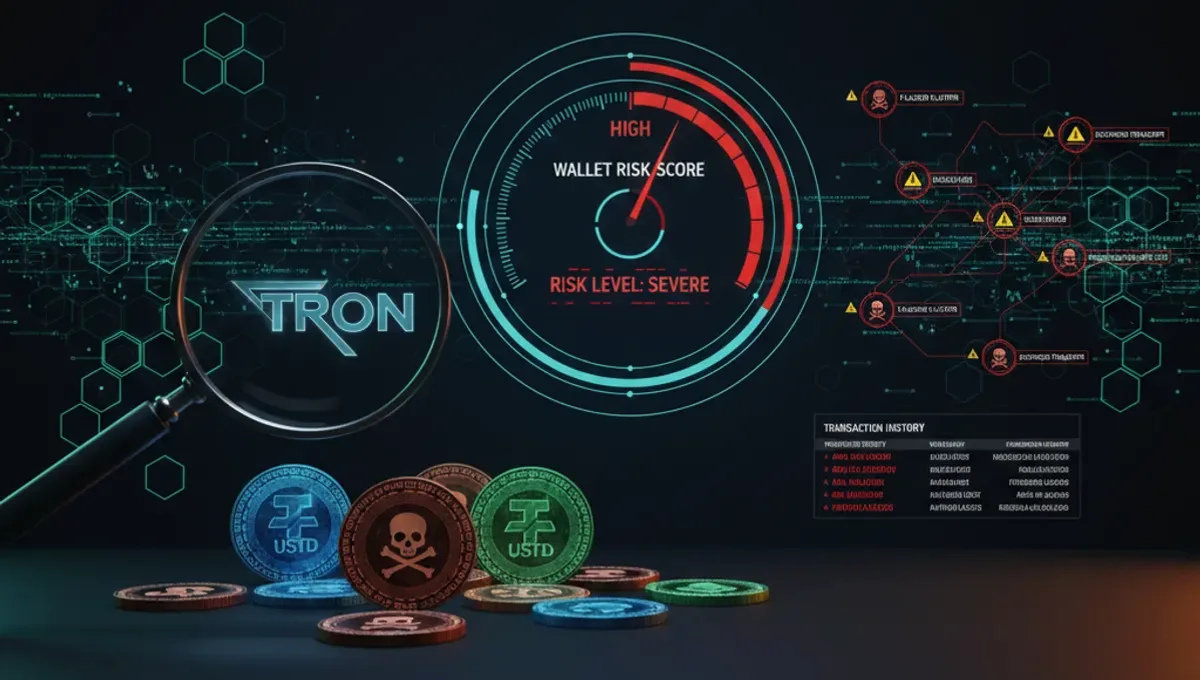
What Is a Crypto Wallet Risk Score?
A crypto wallet risk score quantifies the compliance risk associated with a specific blockchain address. It ranges from low (clean funds, minimal exposure) to high (darknet activity, stolen coins, sanctioned entities). The score is generated by analyzing on-chain transaction patterns, wallet age, fund sources, and cross-referencing against known risk indicators.
Risk scoring combines multiple data points: whether the wallet has received funds from mixers, gambling platforms, or known scam addresses; whether it has interacted with darknet markets; and whether it appears on sanctions lists. Each factor contributes to the final score. A wallet holding USDT or BTC that received funds from a mixer may score higher than one with a clean transaction history.
Exchanges and compliance teams use these scores to decide whether to accept deposits or freeze accounts. A high-risk wallet may trigger mandatory review, additional KYC, or outright rejection. Understanding your wallet's score before sending funds to an exchange prevents costly delays or account locks.
How Does AML Screening Calculate a Wallet Risk Score?
AML (Anti-Money Laundering) screening uses blockchain analytics to trace fund origins and flag suspicious patterns. The process works in layers:
- Transaction tracing: Analysts map where funds entered the wallet and where they came from historically.
- Risk database matching: The wallet address is cross-checked against known lists of darknet markets, sanctioned entities, and stolen fund addresses.
- Behavioral analysis: Mixing activity, rapid fund movement, and interactions with high-risk services increase the score.
- Entity linking: If the wallet is linked to a known risky entity (exchange hack, Ponzi scheme), the score rises.
- Sanctions screening: Addresses tied to sanctioned jurisdictions or individuals receive elevated flags.
For example, a TRX wallet that received funds from a known mixer will score higher than one funded directly from a regulated exchange. A USDT wallet with no prior transaction history scores lower than one with years of clean activity. The scoring model is proprietary to each service, but all reputable providers follow similar AML compliance frameworks.
What Do Different Risk Score Levels Mean?
Risk scores typically fall into three to five categories. Understanding these thresholds helps you decide whether to accept or reject incoming funds:
Low Risk (0–25%): Clean transaction history, no darknet exposure, no sanctions flags. Funds are suitable for immediate deposit to regulated exchanges without additional review.
Medium Risk (26–50%): Minor red flags such as interaction with gambling platforms, brief mixer exposure, or unverified fund sources. Most exchanges accept these wallets but may request additional documentation.
High Risk (51–75%): Significant exposure to darknet markets, multiple mixer interactions, or links to scams. Exchanges often freeze or reject deposits pending investigation.
Critical Risk (76–100%): Direct darknet activity, stolen funds, sanctioned entity links, or active money laundering indicators. Deposits are blocked, and the wallet may be reported to authorities.
Acceptable thresholds vary by exchange and jurisdiction. Some accept up to 50% risk; others enforce a strict 25% limit. Before receiving funds, confirm your exchange's policy or use a crypto wallet screening service to check the sender's address.
How to Check a Crypto Wallet Risk Score Before Receiving Funds
Checking a wallet's risk score takes minutes and prevents costly mistakes. Here's the step-by-step process:
- Obtain the wallet address: Ask the sender for their TRX, USDT, BTC, or ETH address.
- Visit an AML check service: Use a reputable crypto wallet screening tool (our curated AML Services list includes verified providers).
- Enter the address: Paste the address into the search field and select the blockchain (Tron, Ethereum, Bitcoin, etc.).
- Review the report: The service returns a risk score, transaction history, and specific flags (darknet exposure, sanctions, mixer use).
- Interpret the results: Compare the score against your exchange's acceptable threshold.
- Make a decision: Accept the transfer if the score is acceptable, or request funds from a different wallet.
For USDT on Tron (TRC20), check the sender's TRX address. For Bitcoin, verify the BTC address. Most services provide instant results and detailed breakdowns of risk factors. If you're unsure, err on the side of caution—a rejected transfer is safer than frozen USDT or a banned exchange account.
Common Risk Factors That Raise a Wallet's Score
Several behaviors and associations trigger higher risk scores:
Mixer Interaction: Wallets that have sent funds through privacy mixers are flagged as attempting to obscure transaction trails. Even a single mixer transaction can elevate the score.
Darknet Market Exposure: Direct deposits from or withdrawals to known darknet marketplaces (regardless of the stated purpose) result in critical flags.
Stolen Funds: Wallets receiving proceeds from exchange hacks or theft are marked as holding stolen crypto.
Sanctions Lists: Addresses linked to sanctioned countries, entities, or individuals are automatically flagged and often result in frozen USDT or account bans.
Gambling Platforms: Deposits from or to gambling services may increase risk scores, depending on the exchange's policy.
Scam Addresses: Wallets known to have participated in Ponzi schemes, rug pulls, or phishing scams receive high-risk ratings.
Rapid Fund Movement: Frequent transfers between wallets in short timeframes can indicate layering (an AML red flag).
Understanding these factors helps you assess whether incoming funds are safe or whether you should request an alternative source.
What Happens If Your Wallet Is Flagged as High Risk?
A high-risk wallet score does not automatically mean the funds are illegal, but it triggers compliance review. Here's what typically happens:
Exchange Deposit Rejection: The exchange may refuse the deposit outright or place it in a pending review queue.
Account Freeze: If you deposit flagged funds, the exchange may freeze your account pending investigation. USDT or BTC held in frozen accounts cannot be withdrawn or traded.
Enhanced KYC: You may be asked to provide additional documentation explaining the fund source and your relationship to the sender.
Account Ban: Repeated deposits of high-risk funds can result in permanent account closure and forfeiture of holdings (depending on jurisdiction and exchange policy).
Regulatory Reporting: Exchanges report suspicious activity to financial authorities. This does not mean you've committed a crime, but it creates a compliance record.
Mitigation Steps: If your wallet is flagged, request funds from a different source, ask the sender to use a different wallet, or provide documentation proving the funds are legitimate. Some exchanges allow appeals with supporting evidence.
Best Practices for Avoiding High-Risk Wallet Scores
Protecting your wallet's risk profile requires intentional practices:
Use Regulated Exchanges: Receive funds directly from KYC-verified exchanges rather than peer-to-peer transfers. These sources have lower risk scores.
Avoid Mixers: Never send funds through privacy mixers if you plan to deposit them to an exchange. Mixer use is a major red flag.
Keep Clean Records: Maintain documentation of all fund sources. If your wallet is flagged, you can provide proof of legitimacy.
Screen Incoming Transfers: Before accepting funds, check the sender's wallet risk score using a crypto wallet screening service.
Use Dedicated Wallets: Keep exchange-bound funds in a separate wallet from experimental or high-risk activity.
Monitor Your Wallet: Periodically check your own wallet's score to catch unexpected flags early.
Request Clean Sources: If someone offers to send you funds, ask them to use a wallet with a low risk score. Most legitimate senders will comply.
These practices minimize the chance of receiving tainted coins and reduce the risk of frozen USDT or exchange account bans. Start by checking wallets through the trusted AML services listed on our verified provider page.
Frequently asked questions
Can a low risk score guarantee my funds won't be frozen?
A low risk score significantly reduces the chance of frozen USDT or account bans, but it does not guarantee acceptance. Exchanges apply their own thresholds and may review wallets for other reasons. However, low-risk wallets pass most compliance checks without issue. Always verify your exchange's specific policy before depositing.
How often should I check my crypto wallet's risk score?
Check your wallet's score before making large deposits to an exchange or if you suspect unusual activity. If you receive funds regularly, screen incoming wallets each time. Your own wallet's score can change if it receives flagged funds, so periodic checks help catch problems early.
What's the difference between a risk score and a sanctions check?
A risk score is a broad compliance rating covering darknet exposure, mixer use, and stolen funds. A sanctions check specifically verifies whether an address is linked to sanctioned countries or entities. Most AML screening services include both. Sanctions flags are typically more severe and result in automatic account freezes.
Can I dispute a high-risk wallet score?
You cannot directly dispute the score assigned by a blockchain analytics provider, but you can appeal to your exchange if your account is frozen. Provide documentation proving the funds are legitimate and unrelated to the flagged activity. Some exchanges reverse freezes with sufficient evidence; others do not.
Do all blockchains use the same risk scoring system?
No. Bitcoin, Ethereum, Tron, and other blockchains have different transaction patterns and risk profiles. A TRX wallet and a BTC wallet with identical activity histories may receive different scores due to blockchain-specific risk factors. Always use a service that supports the specific blockchain you're checking.