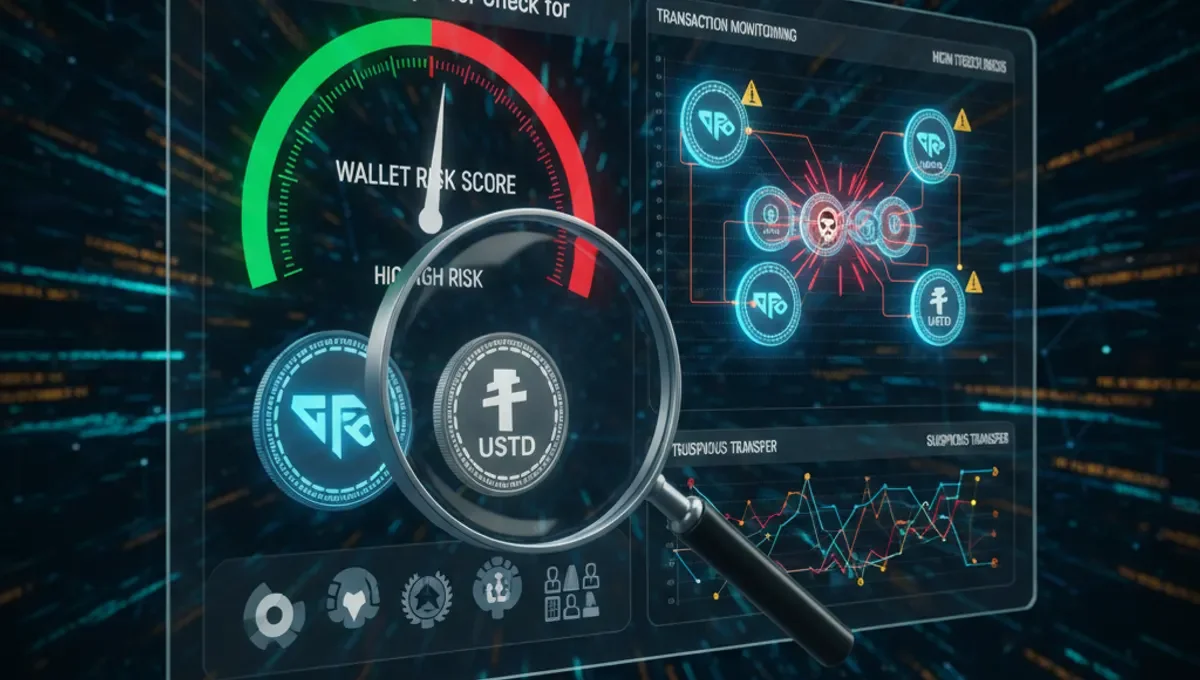
What Is a Crypto Wallet AML Check?
A crypto wallet AML check is a blockchain analysis scan that examines transaction history, fund sources, and address behavior to assign a risk score. AML (Anti-Money Laundering) compliance tools flag addresses linked to darknet markets, mixers, stolen funds, scams, gambling platforms, and sanctioned entities. The check produces a risk rating—typically low, medium, or high—that indicates whether coins received from or sent to that address carry compliance risk. Exchanges, payment processors, and regulated businesses use these checks to meet KYC/KYT (Know Your Customer / Know Your Transaction) obligations. A single wallet may hold both clean and tainted coins; screening identifies which transactions carry exposure so you can make informed decisions before accepting or moving funds.
How Does Crypto Wallet Risk Scoring Work?
Risk scoring combines on-chain data analysis with threat intelligence. Blockchain analytics platforms trace transaction flows backward and forward from a wallet address, mapping connections to known high-risk sources. Scoring factors include:
- direct receipt of funds from darknet markets or mixing services,
- transaction patterns matching money laundering typologies,
- presence on sanctions lists or law enforcement watchlists,
- clustering with addresses flagged for theft or fraud,
- time elapsed since risky activity (older exposure may lower risk), and
- volume of clean transactions offsetting tainted inflows. A wallet with a single small deposit from a mixer may score medium risk, while one receiving large volumes from a known scam scores high. The risk score reflects probability of regulatory action or exchange rejection, not certainty. Different services may weight factors differently, so comparing multiple checks provides a fuller picture.
Step-by-Step: How to Check a Crypto Wallet Before Receiving USDT or TRX
Follow these steps to perform a crypto wallet screening before accepting funds:
- Obtain the full wallet address from the sender—ensure it matches exactly, as typos create different addresses.
- Visit a trusted AML check service (our curated AML Services page lists verified providers).
- Paste the address into the search field and select the blockchain (Tron for TRX, Ethereum for USDT-ERC20, Bitcoin for BTC).
- Run the scan—most services return results in seconds to minutes.
- Review the risk score and detailed report, which shows transaction history, linked entities, and specific risk flags.
- Check the tainted coin percentage—if a high proportion of the wallet's balance originates from high-risk sources, consider declining the transaction.
- Cross-reference with a second service if the score is borderline or the stakes are high. Document the check date and result for compliance records.
Understanding Risk Score Levels and Acceptable Thresholds
Risk scores typically fall into three bands, though exact thresholds vary by service: Low Risk (0–30%): Minimal darknet or sanctions exposure; safe for most transactions. Medium Risk (30–70%): Some exposure to mixers, unverified sources, or minor sanctions flags; acceptable for peer-to-peer transfers but may trigger exchange scrutiny. High Risk (70–100%): Direct links to darknet markets, theft, scams, or sanctioned entities; likely to be rejected by exchanges or frozen by compliance teams. For regulated businesses, acceptable thresholds depend on jurisdiction and risk appetite. A payment processor may reject anything above 20%, while a peer-to-peer trader might accept up to 50% if the transaction size is small. If you receive USDT flagged as high-risk, depositing it to an exchange risks account suspension or fund seizure. Document your decision to accept or reject a wallet based on its score—this demonstrates due diligence if regulators inquire.
What Happens If Your Crypto Coins Are Flagged as Tainted?
If coins in your wallet are flagged as tainted during an AML check, several outcomes are possible. Exchanges may freeze your account pending investigation, delay withdrawals, or reject deposits entirely. Stablecoins like USDT may be blacklisted on certain blockchains if they're linked to high-risk activity, rendering them unspendable on compliant platforms. You retain ownership of the coins on-chain, but their utility is severely limited. If you received tainted coins unknowingly, document the source and transaction date; some exchanges may whitelist your account after review. If you suspect the coins are proceeds of theft or fraud, reporting to the relevant blockchain analytics firm or law enforcement may help. Mixing or tumbling tainted coins to obscure their origin is illegal in most jurisdictions and increases penalties. The safest approach is to avoid receiving flagged coins in the first place by running wallet checks before accepting transfers.
Crypto Wallet Screening vs. Transaction Monitoring: Key Differences
Wallet screening and transaction monitoring serve different compliance purposes. Wallet screening is a point-in-time check: you examine a single address before a transaction to assess current risk. Transaction monitoring is ongoing: compliance systems track all inbound and outbound transfers from your wallet or exchange account, flagging suspicious patterns over time. Screening answers the question, 'Is this address safe to transact with right now?' Monitoring answers, 'Are my own transactions showing signs of illicit activity?' Both are essential for regulated entities. A business might screen a customer's withdrawal address before processing a payout, then monitor that customer's account for unusual activity patterns. For individuals, running periodic wallet checks on addresses you interact with provides similar protection. Combining both approaches—screening before transactions and monitoring your own activity—minimizes compliance risk and helps you avoid receiving or sending tainted coins.
Choosing a Trusted AML Check Service for Your Needs
When selecting a crypto wallet AML check tool, evaluate these factors:
- Blockchain coverage—ensure it supports TRX, USDT, BTC, and ETH addresses you need to check.
- Data freshness—scores should reflect recent on-chain activity, not outdated snapshots.
- Transparency—the service should explain which risk factors triggered a high score and cite sources.
- Accuracy—compare results across multiple services to identify consistent patterns; outliers may indicate poor data quality.
- Pricing—free checks often have limits (e.g., 5 scans per day); paid plans suit frequent users.
- API access—if you need to integrate screening into your workflow, check whether the service offers developer tools. Our AML Services page curates verified providers that meet these standards, making it a reliable starting point for finding a service suited to your transaction volume and compliance requirements. Test a service with a known address before committing to paid plans.
Frequently asked questions
How long does a crypto wallet AML check take?
Most AML checks complete in seconds to a few minutes. Simple queries on small addresses return instantly. Complex wallets with deep transaction histories may take longer. Some services queue requests during high traffic, adding a delay. Expect results within 5–10 minutes in normal conditions.
Can I check a wallet anonymously?
Yes, most AML check services do not require login or personal information to run a basic scan. You paste an address and receive a report without registration. However, some services limit free anonymous checks to a few per day. Paid accounts or API access may require identity verification for compliance reasons.
What if two AML services give different risk scores for the same wallet?
Different services use different data sources, algorithms, and update frequencies, so scores may vary. This is normal. If scores diverge significantly, check both reports for the specific risk factors flagged. A wallet flagged high-risk by one service and low by another warrants caution—use the higher score as your baseline and investigate the discrepancy.
Is a low AML risk score a guarantee the coins are clean?
No. A low risk score means the wallet has no known direct links to darknet markets, theft, or sanctions—but it does not guarantee the coins are legitimate. New wallets or those with sparse transaction history may score low simply due to lack of data. Always combine AML checks with other due diligence, such as verifying the sender's identity and transaction context.
Do I need to check every wallet I receive crypto from?
For peer-to-peer transfers or high-value transactions, yes. For small amounts from trusted contacts, a check may be optional. Regulated businesses must screen all customer addresses. If you plan to deposit coins to an exchange, screening first prevents account freezes. Periodic checks on your own wallets help you spot unwanted exposure early.