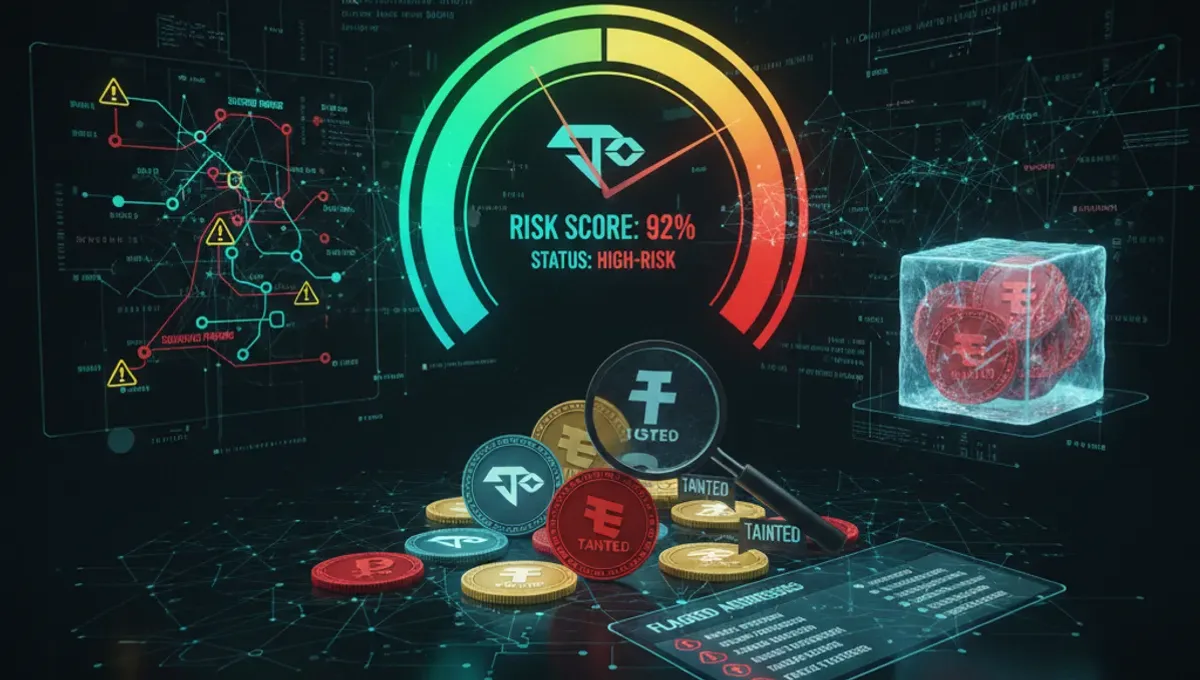
What Does an AML Check Mean in Crypto
An AML check in crypto is a compliance scan that screens a wallet address for anti-money laundering risk. It examines the wallet's transaction history, fund sources, and behavioral patterns to detect exposure to illicit activity. The check looks for connections to known risk categories: cryptocurrency mixers (which obscure fund origins), darknet market wallets, stolen funds, sanctioned entities, and gambling platforms. The result is typically a risk score—low, medium, or high—that indicates whether the wallet poses compliance or legal risk. This differs from KYC (know-your-customer) checks, which verify identity; AML checks focus on transaction behavior and fund legitimacy. For exchanges and custodians, AML checks are mandatory under financial regulations. For individual users, they're a practical safeguard before accepting USDT, TRX, BTC, or ETH from unknown sources.
How Long Does the AML Check Process Actually Take
The speed of an AML check depends on the service architecture and blockchain load. Most modern AML check services return results in 5 to 30 seconds for a single wallet address. This speed is possible because the service queries a pre-built database of flagged addresses and transaction patterns rather than scanning the entire blockchain in real time. For batch checks (screening multiple addresses at once), processing may take longer—from minutes to hours—depending on volume. Network congestion can add slight delays, but blockchain data itself is immutable and instantly accessible. Some services offer instant results for basic risk scoring, while deeper forensic analysis (tracing fund origins across multiple hops) may take longer. The fastest checks use cached blockchain data and heuristic models to flag high-risk patterns immediately. If a wallet has no known risk signals, the check completes almost instantly. Conversely, wallets with complex transaction histories may require a few seconds longer to analyze.
What Factors Affect AML Check Speed
Several factors influence how quickly an AML check completes. First, the service's data infrastructure matters: services with real-time blockchain indexing and pre-computed risk models return results faster than those querying live data. Second, wallet complexity affects timing—a simple wallet with few transactions checks faster than one with hundreds of transfers. Third, the blockchain network itself plays a role: Bitcoin and Ethereum have mature analytics infrastructure, so checks are typically faster than for newer networks. Fourth, whether the address has been previously flagged speeds up results, since the service can retrieve cached risk data. Fifth, batch size impacts speed: checking one address is nearly instant, but screening 1,000 addresses takes proportionally longer. Finally, service load during peak hours may introduce minor delays. Most reputable AML check services prioritize speed and maintain distributed servers to minimize latency. For time-sensitive transactions, instant checks are standard; if a service takes more than a minute for a single address, it may indicate outdated infrastructure.
What Does the AML Check Fee Cover and How Long Is Analysis Valid
AML check fees vary by service and scope. Some services offer free basic checks (limited addresses per month), while others charge per address or per batch. The fee typically covers the risk assessment at the moment of the check, not ongoing monitoring. It's important to understand that an AML check is a snapshot in time: a wallet flagged as low-risk today could receive tainted funds tomorrow, changing its risk profile. This is why some services offer transaction monitoring—continuous screening of a wallet's activity—for an additional fee. The validity of a single AML check is immediate but not permanent. If you need to verify the same wallet again weeks later, you should run a fresh check, as its transaction history and risk exposure may have changed. Some services bundle AML checks with wallet screening packages that include periodic updates. For compliance purposes, exchanges typically re-screen wallets at intervals or when suspicious activity is detected. Understanding the scope of your AML check fee ensures you know whether you're getting a one-time snapshot or ongoing protection.
Step-by-Step: How to Check a Wallet Before Receiving Crypto
Before accepting USDT, TRX, BTC, or ETH from an unknown source, follow these steps to verify the wallet's risk profile:
- Obtain the wallet address from the sender and confirm it matches any documentation they provide.
- Visit a trusted AML check service (our curated AML Services page lists verified tools for screening wallets).
- Enter the wallet address and select the blockchain network (Tron for TRX, Ethereum for USDT on ETH, Bitcoin for BTC, etc.).
- Initiate the scan—results typically appear within seconds to 30 seconds.
- Review the risk score: low-risk wallets are generally safe; medium-risk wallets warrant caution; high-risk wallets should be rejected.
- Check the risk category breakdown: if the wallet is flagged for mixer exposure, darknet connections, or stolen funds, decline the transaction.
- If the risk score is acceptable, proceed with the transaction.
- Document the check result for your records, especially if you're a business or custodian.
This process takes less than a minute and can prevent you from receiving frozen or sanctioned funds that exchanges might later block.
Understanding Risk Score Levels and What to Do If Coins Are Flagged
AML risk scores are typically categorized into three or four levels. A low-risk score (often 0–20 on a 0–100 scale) indicates minimal exposure to illicit activity and is generally safe to accept. A medium-risk score (20–60) suggests some exposure to risky behavior—perhaps the wallet has interacted with a mixer or received funds from a gambling platform—but may not be a dealbreaker depending on your compliance requirements. A high-risk score (60–100) signals significant red flags: direct mixer use, darknet market connections, stolen funds, or sanctioned entity exposure. If you receive coins flagged as high-risk, do not deposit them to an exchange, as they may be frozen or trigger account restrictions. If you've already received flagged coins, contact your exchange's compliance team immediately and explain the source. Some exchanges allow you to move coins to a new wallet to reset their history, though this is not guaranteed to remove the flag. For businesses, high-risk coins should be rejected outright. Understanding these thresholds helps you make informed decisions about which wallets to trust.
Why Speed Matters: How Exchanges Freeze Funds and Detect Tainted Coins
Exchanges use AML checks and transaction monitoring to detect tainted coins and frozen funds. When you deposit crypto to an exchange, their compliance systems screen the wallet address and transaction history. If the deposit is flagged as high-risk—originating from a mixer, darknet market, or sanctioned entity—the exchange may freeze your account pending investigation. This freeze can last days, weeks, or indefinitely. In some cases, exchanges permanently close accounts associated with high-risk deposits. This is why checking a wallet before you receive it is critical: you avoid the risk of depositing flagged coins and facing account restrictions. Exchanges also use continuous transaction monitoring, meaning they track wallet activity even after deposit. If a wallet suddenly receives a large transfer from a known illicit source, the exchange may flag it retroactively. By running an AML check before accepting crypto, you protect yourself from these downstream consequences. The speed of AML checks—seconds to minutes—makes this verification practical for every transaction.
Frequently asked questions
How long does an AML check take on a crypto wallet
Most AML checks complete in 5 to 30 seconds for a single wallet address. Speed depends on the service's data infrastructure and whether the wallet has been previously flagged. Batch checks of multiple addresses take longer, from minutes to hours depending on volume. Real-time blockchain indexing and pre-computed risk models enable instant results.
What does AML check mean and why do I need one
An AML check screens a wallet for anti-money laundering risk by analyzing transaction history and exposure to illicit activity—mixers, darknet markets, stolen funds, and sanctioned entities. You need one before accepting crypto from unknown sources to avoid receiving frozen or flagged coins that exchanges may block or restrict.
What is included in an AML check fee
AML check fees typically cover a one-time risk assessment snapshot. Some services offer free basic checks with limits, while others charge per address or per batch. Ongoing transaction monitoring costs extra. The fee does not guarantee permanent validity; wallets can change risk profile as they receive new transactions.
How do I check if a wallet is safe before receiving USDT or TRX
Obtain the wallet address, visit a trusted AML check service, enter the address and blockchain network, and review the risk score within seconds. Low-risk scores are safe; high-risk scores indicate mixer, darknet, or stolen fund exposure and should be rejected. Check our AML Services page for verified screening tools.
What happens if I receive tainted coins and deposit them to an exchange
Exchanges screen deposits for high-risk flags. If your coins are flagged as tainted, the exchange may freeze your account pending investigation or permanently close it. This is why running an AML check before accepting crypto is critical—it prevents you from depositing flagged coins and facing account restrictions.