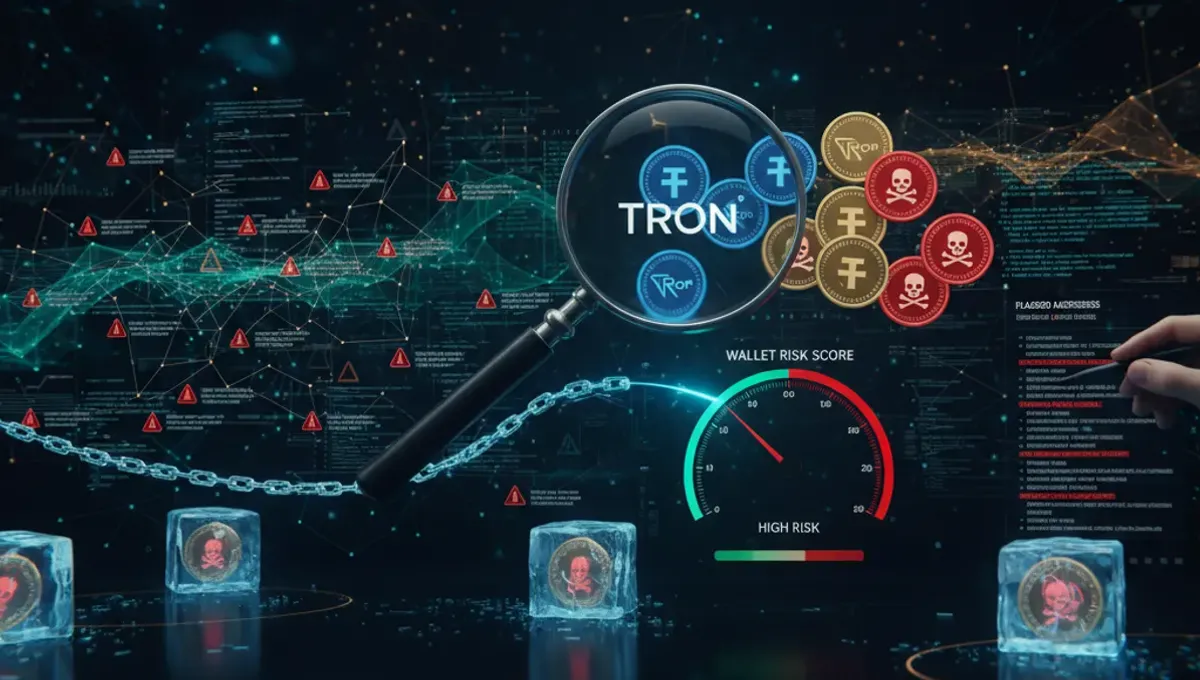
How Blockchain Traceability Works
Every cryptocurrency transaction creates an immutable record on the blockchain. When you send Bitcoin, Ethereum, USDT, or TRX, the transaction includes the sender's address, recipient's address, amount, timestamp, and transaction hash. This data is visible to anyone running a blockchain node or using a block explorer.
Traceability depends on the blockchain's design. Bitcoin and Ethereum transactions are fully traceable by default. Tron (TRX) and USDT on Tron are equally transparent. The pseudonymous nature of addresses—long alphanumeric strings without obvious owner names—creates a false sense of privacy, but blockchain analytics firms can cluster addresses, identify patterns, and correlate on-chain activity with known entities like exchanges, wallets, and darknet markets.
This permanent record is why are crypto transactions traceable: the blockchain itself is the audit trail. No transaction can be deleted or hidden once confirmed.
What Is KYT and How Does It Detect Tainted Coins?
KYT (Know Your Transaction) is a compliance process that screens incoming and outgoing transactions in real time. Unlike KYC (Know Your Customer), which verifies user identity at account opening, KYT monitors ongoing transaction activity for risk signals.
KYT crypto tools work by:
- Checking the source address against sanctions lists, stolen fund databases, and darknet market addresses.
- Analyzing transaction patterns to identify mixing services, which obscure fund origins.
- Flagging transactions involving high-risk categories: mixers, gambling platforms, scams, and stolen wallets.
- Assigning a risk score based on the address history and associated entities.
When an exchange or wallet receives USDT or TRX from a flagged address, KYT systems alert compliance teams. If the risk score exceeds the institution's threshold, the transaction may be delayed, rejected, or frozen pending investigation. This is why can stolen crypto be recovered: law enforcement and exchanges can trace stolen funds through KYT screening and potentially recover them if they haven't been mixed or converted.
AML Check Crypto: Risk Scoring and Address Classification
An AML check crypto process assigns a risk score to a wallet address based on its transaction history and associations. Risk scores typically range from low (clean, no suspicious activity) to high (linked to theft, sanctions, or darknet activity).
Risk categories include:
- Clean: No known association with illicit activity.
- Low Risk: Minor exposure to high-risk services; generally acceptable for most transactions.
- Medium Risk: Some connection to mixers, gambling, or unverified sources; may require additional review.
- High Risk: Direct links to stolen funds, darknet markets, sanctions lists, or known scams.
- Critical: Confirmed involvement in theft, ransomware, or sanctioned entities.
Exchanges and financial institutions set their own risk thresholds. A medium-risk address might be acceptable for peer-to-peer transfers but rejected for large institutional deposits. The AML check crypto process is continuous: as new transactions occur, the risk score updates. This is why checking a wallet before receiving USDT or TRX is essential—you can verify the sender's address risk score and avoid receiving tainted coins that could freeze your account or trigger compliance holds.
Can Stolen Crypto Be Recovered? Tracing and Recovery Steps
Can stolen crypto be recovered? Yes, in some cases. Recovery depends on whether the stolen funds have been mixed, converted to other assets, or moved to an exchange.
Recovery process:
- Report the theft to law enforcement and the exchange where you held the funds (if applicable).
- Use blockchain analytics to trace the stolen address and document the transaction chain.
- If the thief deposits stolen funds on a regulated exchange, the exchange's AML checks will flag the address, and compliance teams can freeze the account pending investigation.
- Law enforcement can work with exchanges and international partners to recover frozen funds.
However, if stolen crypto is sent through mixers or converted to other cryptocurrencies or fiat currency, recovery becomes much harder. Mixers deliberately obscure transaction trails, making it difficult to trace funds further. This is why can you get stolen crypto back depends heavily on how quickly the theft is reported and whether the thief attempts to cash out on a regulated platform.
Blockchain traceability is a deterrent: thieves know transactions can be traced, which is why many stolen funds are eventually abandoned or moved through high-risk channels that attract law enforcement attention.
How Exchanges Freeze Funds and Detect Tainted Coins
Exchanges use AML and KYT systems to detect tainted coins and frozen USDT or other assets when risk is identified. When you deposit cryptocurrency, the exchange screens your source address against multiple data sources: sanctions lists, stolen fund databases, mixer registries, and darknet market addresses.
If your deposit address is flagged:
- The transaction may be held pending manual review.
- Your account may be temporarily restricted from withdrawals.
- The exchange may request additional documentation (proof of funds origin, identity verification).
- In severe cases, the funds may be permanently frozen and reported to authorities.
This happens because exchanges face regulatory pressure and financial penalties if they process transactions involving sanctioned entities, stolen funds, or money laundering. A single undetected transaction can result in millions in fines and license revocation.
To avoid frozen USDT or other assets, verify the source address before receiving funds. Check the sender's wallet using trusted AML services listed on our curated AML Services page—this is the safest starting point to confirm the address risk score and ensure you're not receiving tainted coins.
How to Check a Wallet Before Receiving Crypto
Before accepting a deposit of USDT, TRX, Bitcoin, or any cryptocurrency, check the sender's address for risk. This simple step prevents frozen accounts and compliance complications.
Steps to check a wallet:
- Obtain the sender's full wallet address (e.g., a TRC20 address for USDT on Tron).
- Use a blockchain analytics tool or AML check service to screen the address.
- Review the risk score and any flagged associations (mixers, darknet, stolen funds).
- If the risk score is low or acceptable, proceed with the transaction.
- If the risk score is high or critical, ask the sender for clarification or decline the transaction.
Acceptable risk thresholds vary by use case. For peer-to-peer transfers, a low-risk address is ideal. For business transactions, medium-risk may be acceptable if the sender can explain the activity. For large institutional deposits, only low-risk addresses should be accepted.
Our verified AML services page lists trusted tools for checking TRX, USDT, BTC, and ETH addresses. These services provide detailed risk reports, including exposure to mixers, darknet markets, sanctions lists, and stolen fund databases. Using a trusted service is faster and more reliable than manual blockchain analysis.
Why Traceability Matters: Compliance, Risk, and Best Practices
Understanding that crypto transactions can be traced is essential for anyone handling cryptocurrency. Traceability creates accountability: it deters theft, enables law enforcement action, and protects legitimate users from receiving tainted coins.
Best practices:
- Always verify the source of incoming funds before accepting large deposits.
- Use AML check crypto tools to screen addresses and understand risk.
- Maintain records of all transactions and their risk assessments for compliance.
- Avoid mixing services, gambling platforms, and other high-risk channels if you value transaction privacy.
- Report suspected theft or fraud to law enforcement and your exchange immediately.
For businesses and institutions, continuous transaction monitoring and KYT screening are non-negotiable. Regulatory bodies expect exchanges and custodians to detect and report suspicious activity. Failure to do so results in penalties, account freezes, and reputational damage.
For individuals, the key takeaway is simple: crypto transactions can be traced, stolen crypto can sometimes be recovered, and tainted coins can freeze your account. Before receiving funds, check the sender's address using a trusted AML service. This single action protects you from compliance complications and ensures you're not unknowingly receiving stolen or sanctioned assets.
Frequently asked questions
Can stolen crypto be recovered if sent to an exchange?
Yes, if the thief deposits stolen funds on a regulated exchange, AML systems will flag the address and freeze the account. Law enforcement can then work with the exchange to recover the funds. However, if the thief uses mixers or converts to other assets first, recovery becomes much harder. Report the theft immediately to maximize recovery chances.
Are crypto transactions traceable on all blockchains?
Yes, all major blockchains including Bitcoin, Ethereum, Tron, and others record transactions permanently and publicly. While transactions are pseudonymous, blockchain analytics can link addresses to identities and track fund movement. Privacy coins exist but are less commonly used and more heavily scrutinized by exchanges.
What does a high AML risk score mean for my wallet?
A high AML risk score indicates your address has been associated with suspicious activity: theft, darknet markets, mixers, or sanctions lists. Exchanges may freeze deposits from or to your address, request additional documentation, or reject transactions entirely. You can dispute the score if you believe it's incorrect.
How do I check if a wallet address is tainted before receiving funds?
Use a trusted AML check service to screen the sender's address. Enter the wallet address, and the tool will return a risk score and flagged associations. Our curated AML Services page lists verified tools for checking TRX, USDT, BTC, and ETH addresses. Low-risk scores are safe; high-risk scores warrant caution or refusal.
Can I recover funds if my crypto wallet was hacked?
Recovery depends on how quickly you act. Report the theft to law enforcement and your exchange immediately. If the thief deposits stolen funds on a regulated exchange, AML screening will flag and freeze the account, enabling recovery. If funds are mixed or converted quickly, recovery is unlikely. Blockchain traceability helps law enforcement investigate.