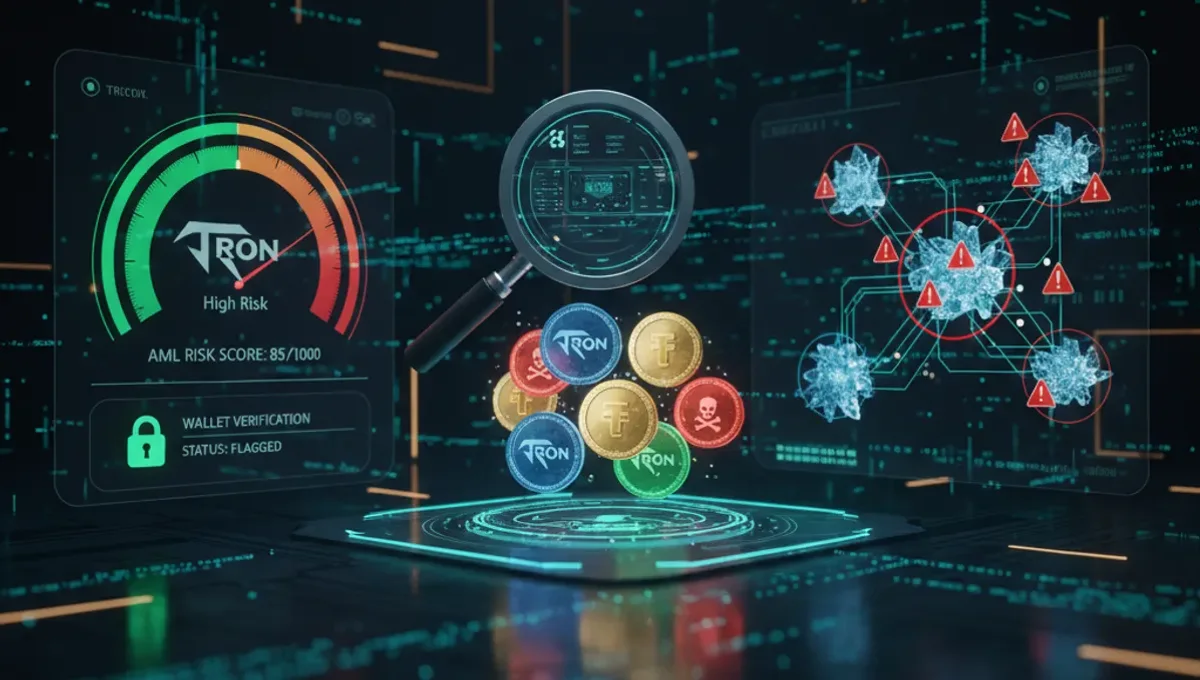
What Is a Tron Address and Why Check It?
A Tron address is a unique identifier on the Tron blockchain, formatted as a 34-character string starting with 'T'. It holds TRX tokens and TRC20-based assets like USDT. Checking a Tron address means analyzing its transaction history and counterparty risk using blockchain analytics. This matters because Tron addresses can receive funds from high-risk sources: darknet markets, ransomware operations, gambling platforms, or sanctioned entities. Exchanges and custodians increasingly freeze or restrict accounts linked to tainted coins. An AML check Tron service scans the address against known risk indicators and assigns a risk score, helping you decide whether to accept or reject a transfer before it settles.
How Does Tron Address Risk Scoring Work?
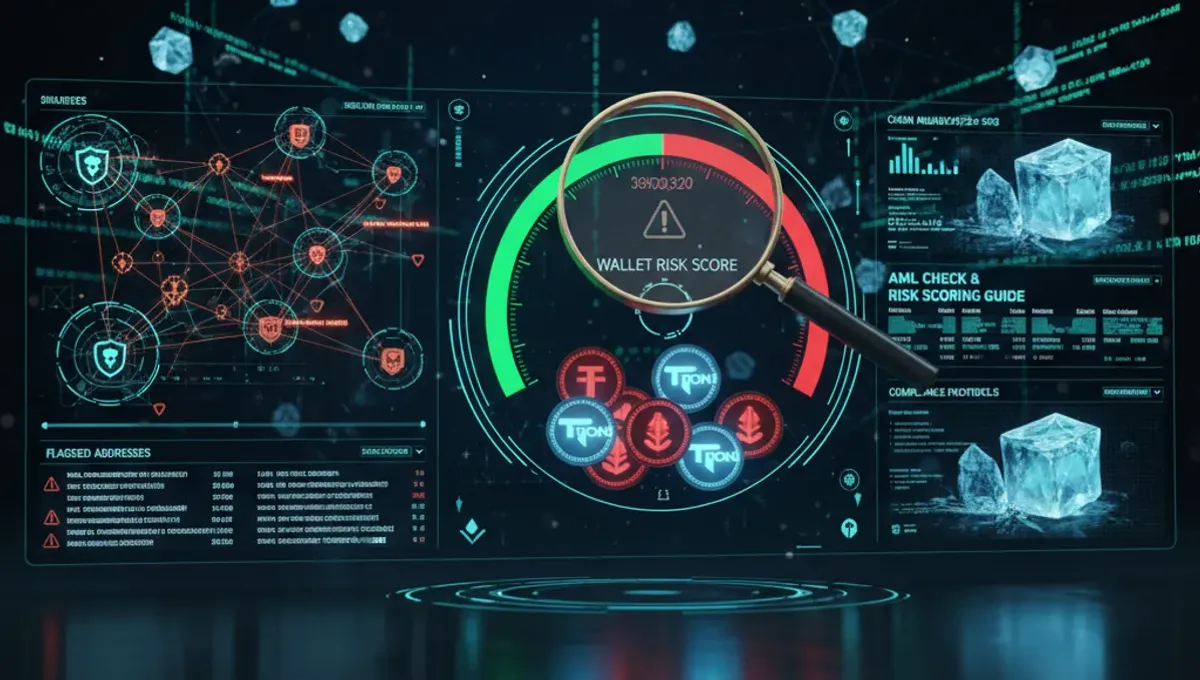
A risk score is a numerical rating (typically 0–100 or Low/Medium/High) that reflects the likelihood an address or its funds are associated with illicit activity or regulatory concern. Scoring considers:
- Direct darknet exposure—whether the address has received funds from known darknet market wallets;
- Mixer usage—whether funds passed through privacy mixers;
- Stolen funds—whether the address received proceeds from hacks or theft;
- Sanctioned entities—whether the address matches OFAC or other sanctions lists;
- Scam or fraud reports—whether the address is flagged in community databases;
- Exchange restrictions—whether major exchanges have flagged or frozen the address. A low risk score (typically 0–20) suggests the address is relatively clean. Medium (20–60) indicates some exposure but not necessarily disqualifying. High (60+) suggests significant red flags and warrants investigation or rejection.
Step-by-Step: How to Check a Tron Address
Follow these steps to perform a tron address checker lookup:
- Copy the Tron address you want to verify—ensure it starts with 'T' and is exactly 34 characters.
- Visit a trusted AML check service (our curated AML Services page lists verified providers).
- Paste the address into the search field.
- Review the risk score and detailed findings: look for darknet exposure, mixer activity, stolen fund flags, and sanctions matches.
- Check the transaction history summary—note the age of the address, volume of activity, and any flagged counterparties.
- Decide based on your risk tolerance: low-risk addresses are generally safe; medium-risk may require further due diligence; high-risk should typically be rejected.
- Document the check result for compliance records if you're a business or exchange.
Understanding Tainted Coins and Dirty Crypto on Tron
Tainted coins are TRX or USDT tokens whose history includes illicit activity or high-risk exposure. On Tron, tainted coins often originate from: darknet market withdrawals, ransomware payments, stolen exchange funds, or sanctioned entity wallets. A tron address lookup may flag tainted coins if the address received them directly or through a chain of transfers. Exchanges and custodians increasingly reject or freeze accounts holding tainted coins, even if the current holder is innocent. The risk is reputational and operational: your account may be restricted, funds frozen pending investigation, or closed entirely. Checking a Tron address before accepting a transfer helps you avoid receiving dirty crypto. If you discover your address holds tainted coins, contact the exchange or service provider immediately and cooperate with any investigation.
Common Risk Categories in Tron Address Checks
When you check a Tron address, the report typically flags these risk categories: Darknet Exposure—the address received funds from known darknet market wallets or mixers. Mixer Activity—funds passed through privacy mixers, obscuring the original source. Stolen Funds—the address received proceeds from confirmed hacks, theft, or fraud. Sanctioned Entities—the address matches OFAC SDN lists or other government sanctions. Gambling—the address is linked to gambling platforms, which some exchanges restrict. Scam Reports—the address appears in community fraud databases or has been reported by users. Exchange Restrictions—major exchanges have flagged or frozen the address. Each category contributes to the overall risk score. A single flag (e.g., mixer activity) may not disqualify an address, but multiple flags or a high-risk score warrant caution.
What to Do If Your Tron Address Is Flagged as High Risk
If a tron address check reveals a high risk score, take these steps:
- Investigate the source—review your transaction history to identify which transfers triggered the flags.
- Contact the sender—ask whether they knowingly received tainted coins or used mixers.
- Consult your exchange or custodian—inform them of the flag and ask whether your account is at risk of restriction.
- Document everything—keep records of the check result, your investigation, and any communications.
- Consider moving funds—if the address is flagged for darknet or stolen fund exposure, consider transferring clean funds to a fresh address and reporting the original address to the exchange.
- Avoid further transfers—do not send flagged funds to exchanges or other services until you've resolved the issue.
- Cooperate with authorities if contacted—if law enforcement or a regulator reaches out, provide full transparency and documentation.
Choosing a Trusted Tron Address Checker Service
Not all AML check services are equal. When selecting a tron address checker, look for:
- Comprehensive data—the service should check against darknet databases, mixer lists, sanctions lists (OFAC, EU, UN), and exchange blacklists.
- Real-time updates—risk data should be current, not months old.
- Transparency—the service should explain which data sources it uses and how it calculates risk scores.
- Coverage—ensure the service covers Tron (TRX and TRC20 tokens like USDT) in addition to Bitcoin and Ethereum.
- Compliance credentials—look for services used by exchanges, custodians, or compliance professionals.
- Privacy—verify that the service does not log or sell your lookup history. Our curated AML Services page lists verified providers that meet these standards. Start there to find a service that fits your needs and compliance requirements.
Frequently asked questions
What does a tron address check reveal?
A Tron address check reveals the transaction history, counterparty risk, and exposure to illicit activity. It flags darknet exposure, mixer usage, stolen funds, sanctioned entities, scams, and exchange restrictions. The result is a risk score (typically 0–100) that helps you decide whether to accept or reject a transfer.
How long does a tron address lookup take?
Most AML check services return results in seconds to a few minutes. The lookup queries blockchain data and cross-references it against darknet databases, sanctions lists, and exchange blacklists. Real-time services are faster; batch or historical checks may take longer.
Can I check a tron address for free?
Some services offer limited free checks (e.g., one or a few lookups per day), while others charge per lookup or offer subscription plans. Free options often provide basic risk scores; paid services include detailed transaction history and compliance reports. Check our AML Services page for options that fit your budget.
What risk score is acceptable for tron addresses?
Risk scores below 20 are generally considered low-risk and safe. Scores 20–60 warrant review but may be acceptable depending on your risk tolerance and use case. Scores above 60 suggest significant red flags and should typically be rejected unless you have strong reason to trust the source.
What happens if I receive tainted coins on my tron address?
Receiving tainted coins can result in your exchange account being frozen, restricted, or closed pending investigation. Exchanges increasingly screen deposits for dirty crypto. If flagged, cooperate with the exchange, document your investigation, and avoid further transfers until the issue is resolved.