What Is a TRON Wallet Address and Why Check It
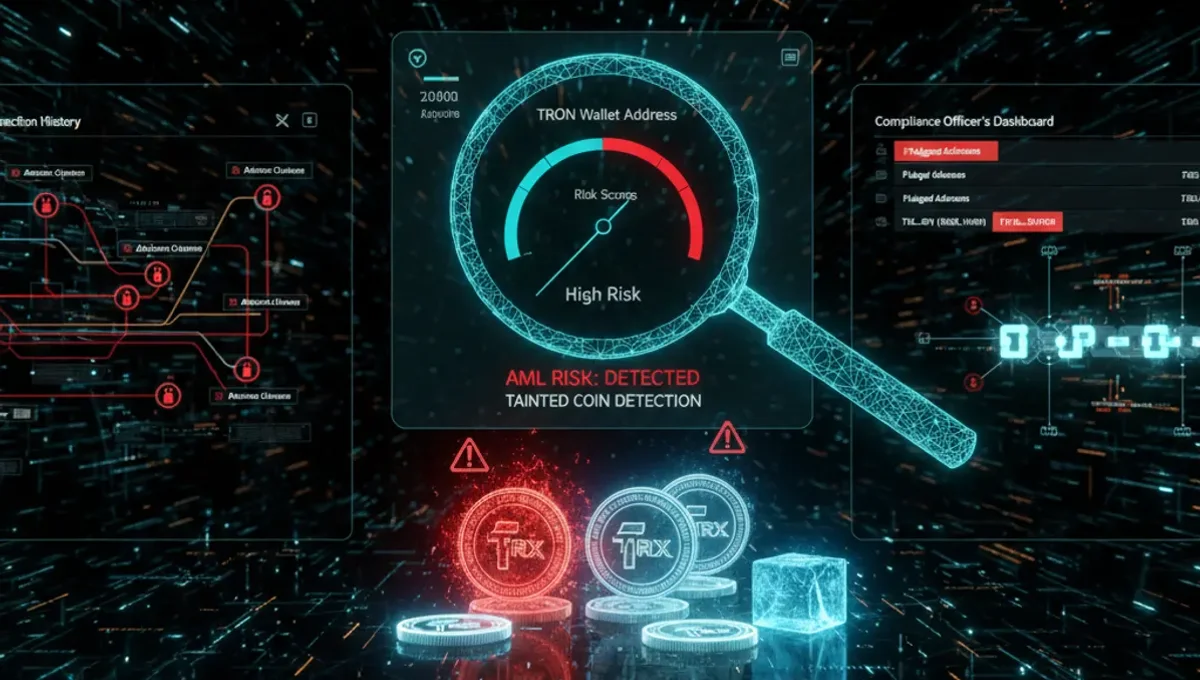
A TRON wallet address is a unique identifier on the TRON blockchain, typically starting with 'T' and containing 34 alphanumeric characters. It functions like a bank account number: it receives and sends TRX (TRON's native token) and TRC20 tokens like USDT. Checking a TRON wallet address matters for two reasons. First, you verify the balance and transaction history to confirm funds exist. Second, and more important for compliance, you assess whether the address or its funds are linked to high-risk activity: mixers, darknet markets, scams, stolen funds, or sanctioned entities. Exchanges and custodians now screen incoming wallets for AML risk; receiving tainted coins can result in frozen USDT, account bans, or transaction reversals. A simple TRON wallet address check protects you from unwittingly accepting compromised funds.
How to Check TRON Wallet Balance Using a Blockchain Explorer
The simplest way to check TRON wallet balance is via a public blockchain explorer. Follow these steps:
- Visit a TRON blockchain explorer (such as the official TRON network explorer or similar public tools).
- Paste the TRON wallet address (starting with 'T') into the search bar.
- Press Enter. The explorer displays the wallet's TRX balance, TRC20 token holdings (including USDT), and full transaction history.
- Review recent transactions to see inbound and outbound activity.
- Note the wallet age and frequency of transfers—older, active wallets with regular legitimate transfers are typically lower risk than dormant or newly created addresses.
This method is free and requires no account. However, a blockchain explorer only shows balance and transaction data; it does not flag AML risk, darknet exposure, or tainted coin status. For that, you need a dedicated AML check tool.
AML Risk Scoring: What Does a TRON Address Risk Score Mean
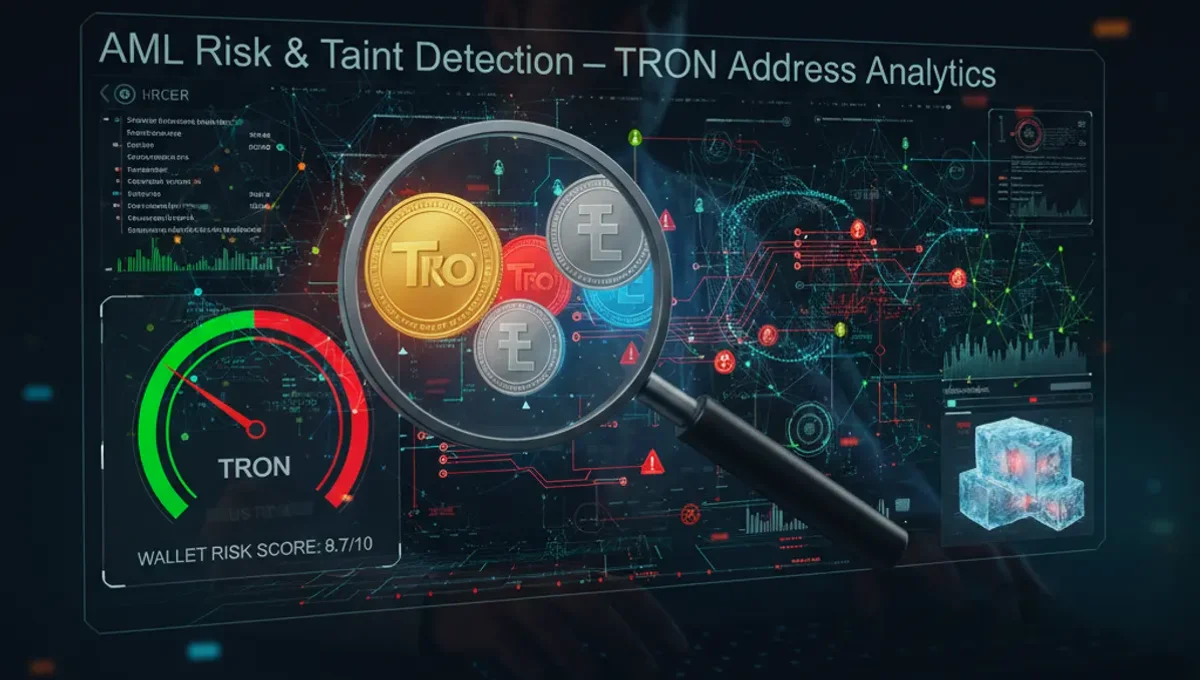
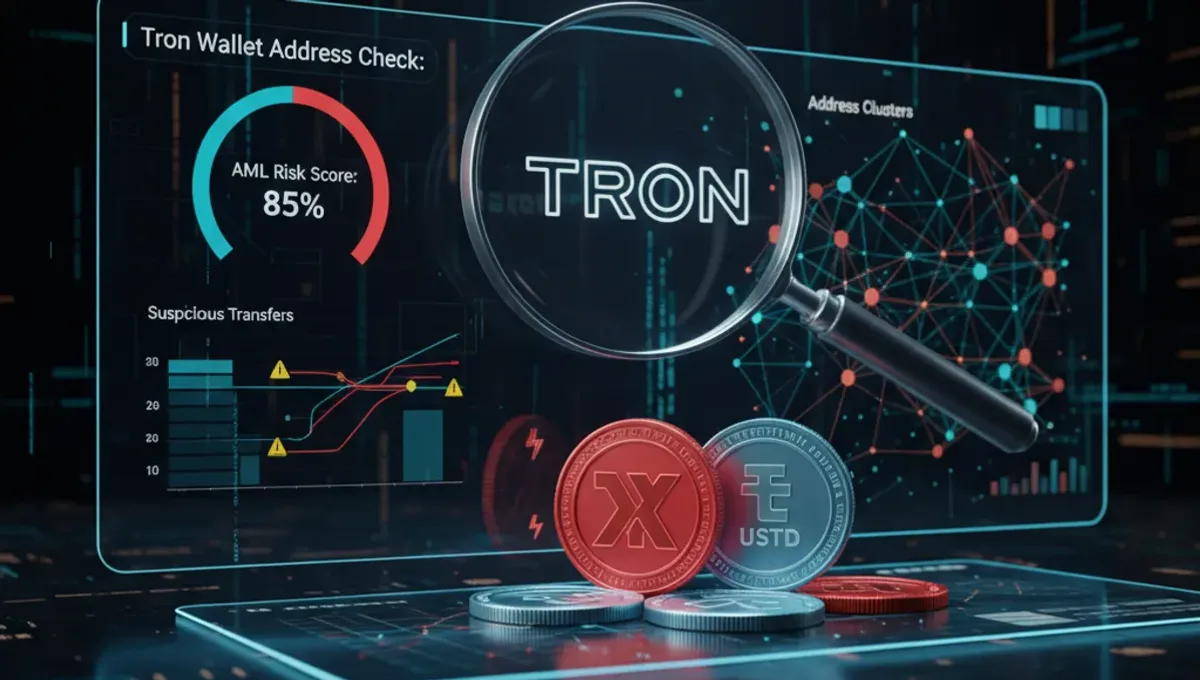
An AML risk score for a TRON wallet address is a numerical rating (often 0–100 or low/medium/high) that indicates the likelihood the address or its funds are linked to illicit activity or compliance violations. Risk scores are calculated by analyzing:
- Transaction patterns: Frequent transfers to known mixers or darknet markets increase risk.
- Counterparty risk: Funds received from sanctioned entities, stolen wallets, or scam addresses raise the score.
- Coin history: USDT or TRX that passed through high-risk addresses inherit taint.
- Address behavior: Newly created wallets, rapid fund cycling, or dormancy can signal suspicious intent.
A low risk score (typically 0–20) suggests the address is clean and safe to transact with. A medium score (21–60) warrants caution; investigate the address history. A high score (61–100) indicates significant compliance risk—receiving funds from that address could trigger exchange freezes or regulatory scrutiny. Before accepting USDT or TRX from an unknown sender, always check the TRON address risk score through a trusted AML service.
Step-by-Step: How to Check a TRON Address for Tainted Coins and Darknet Exposure
To perform a thorough AML check on a TRON wallet address:
- Gather the address: Obtain the full TRON address (starting with 'T') from the sender or counterparty.
- Use an AML screening tool: Visit a reputable AML check service. Our curated list of verified AML services on this site includes tools specifically designed for TRON, USDT, and other crypto assets. These services provide instant risk scoring and detailed reports.
- Enter the address: Paste the TRON address into the screening tool.
- Review the risk score: Check whether the score is low, medium, or high.
- Examine the report: Look for specific flags: darknet market exposure, mixer involvement, stolen fund history, sanctions list matches, or frozen USDT incidents.
- Assess transaction history: Trace recent inbound funds to their source. If they originated from high-risk addresses, the current address inherits that risk.
- Make a decision: Accept the transaction if risk is acceptable for your use case, or decline and request funds from a different address.
This process takes minutes and prevents costly compliance violations or frozen accounts.
Common Red Flags When Checking a TRON Wallet Address
When reviewing a TRON address check result, watch for these warning signs:
- Mixer involvement: Funds routed through privacy mixers suggest an attempt to obscure the source.
- Darknet market links: Any connection to known darknet marketplaces is a hard compliance red flag.
- Scam or theft history: The address received stolen funds or was involved in a documented scam.
- Sanctioned entity exposure: Funds trace back to individuals or organizations on government sanctions lists.
- Rapid fund cycling: Money moves in and out within minutes or hours, typical of money laundering.
- Frozen USDT incidents: The address previously held USDT that was frozen by issuers or exchanges.
- Newly created address: A brand-new wallet with immediate large transfers is higher risk than an established address.
- Dormant then active: An address inactive for months or years that suddenly receives large transfers may indicate a compromised or stolen wallet.
If you see multiple red flags, decline the transaction. If only one minor flag appears, investigate further or request clarification from the sender.
What to Do If Your TRON Wallet Is Flagged as High Risk
If you check your own TRON wallet and discover a high AML risk score, take these steps:
- Identify the source: Review your transaction history to find which inbound transfer caused the flag. Trace it back to its origin.
- Verify legitimacy: Contact the sender to confirm the transfer was intentional and legitimate. If you don't recognize the sender, the funds may be from a scam or theft.
- Isolate the flagged funds: Do not immediately spend or transfer the flagged USDT or TRX. Exchanges may freeze or reverse transactions involving tainted coins.
- Report to your exchange: If you received the funds via an exchange deposit, inform the exchange support team and provide transaction details. They can advise whether the funds are usable.
- Avoid mixing: Do not combine flagged funds with clean funds in the same wallet; this spreads the taint and increases overall risk.
- Consider a new address: For future transactions, use a fresh TRON wallet address to separate clean funds from flagged ones.
- Document everything: Keep records of the transaction, the AML check result, and your correspondence with the sender and exchange.
In most cases, receiving flagged funds does not result in legal liability, but it can trigger exchange account restrictions or transaction delays.
Best Practices for Safe TRON Wallet Transactions
To minimize AML risk and avoid frozen USDT or account bans:
- Always check before receiving: Before accepting TRON or USDT from any new counterparty, run an AML check on their wallet address. Use the trusted AML services listed on our verified services page.
- Request a clean address: If a counterparty's address is flagged, politely ask them to send from a different wallet or clarify the transaction source.
- Maintain clean wallets: Use separate TRON addresses for different purposes (e.g., one for exchange deposits, one for peer-to-peer transfers). This limits contamination if one address is compromised.
- Monitor your balance regularly: Check your TRON wallet balance and recent transactions weekly to spot unauthorized activity early.
- Use reputable exchanges: Deposit TRON and USDT only to exchanges that perform rigorous AML screening. They are less likely to freeze your account.
- Document transactions: Keep records of all significant transfers, including the counterparty, amount, date, and AML check result.
- Educate yourself on risk: Understand what darknet exposure, mixer involvement, and sanctions screening mean so you can interpret AML reports accurately.
These habits protect your funds and your exchange account from compliance complications.
Frequently asked questions
Can I check a TRON wallet balance without the wallet owner's permission
Yes. TRON wallet addresses and balances are public on the blockchain. Anyone can view any address's balance and transaction history using a blockchain explorer. However, you cannot access the wallet's private keys or move funds without the owner's credentials. Checking an address for AML risk is a standard compliance practice before transacting.
What is the difference between checking wallet balance and checking AML risk
Checking wallet balance tells you how much TRX or USDT an address holds and its transaction history. Checking AML risk assesses whether the address or its funds are linked to illicit activity, sanctions, mixers, or darknet markets. Balance is public data; AML risk requires specialized screening tools that analyze transaction patterns and counterparty risk.
How long does a TRON wallet AML check take
Most AML checks on TRON addresses complete in seconds to a few minutes. The tool queries blockchain data and cross-references the address against known risk databases. Results are instant in most cases. Some detailed reports may take a few minutes to generate, but you receive a preliminary risk score immediately.
Can I get my TRON wallet removed from an AML blacklist
TRON addresses are not permanently blacklisted; risk scores are dynamic and based on current transaction patterns and counterparty data. If your address was flagged due to a one-time suspicious transaction, the risk score may decrease over time as new legitimate activity accumulates. If you believe a flag is incorrect, contact the AML service provider or your exchange for clarification and potential review.
What happens if I receive USDT from a high-risk TRON address
Receiving USDT from a high-risk address does not automatically make you liable, but the funds may be flagged as tainted. If you deposit them into an exchange, the exchange may freeze the USDT, reverse the deposit, or restrict your account pending investigation. To avoid this, always check the sender's address before accepting large transfers.